The E-Commerce Opportunity in 2026
Global e-commerce sales are projected to reach $7.4 trillion in 2026. Whether you are selling physical products, digital downloads, or services, there has never been a better time to launch an online store.
Choosing Your E-Commerce Platform
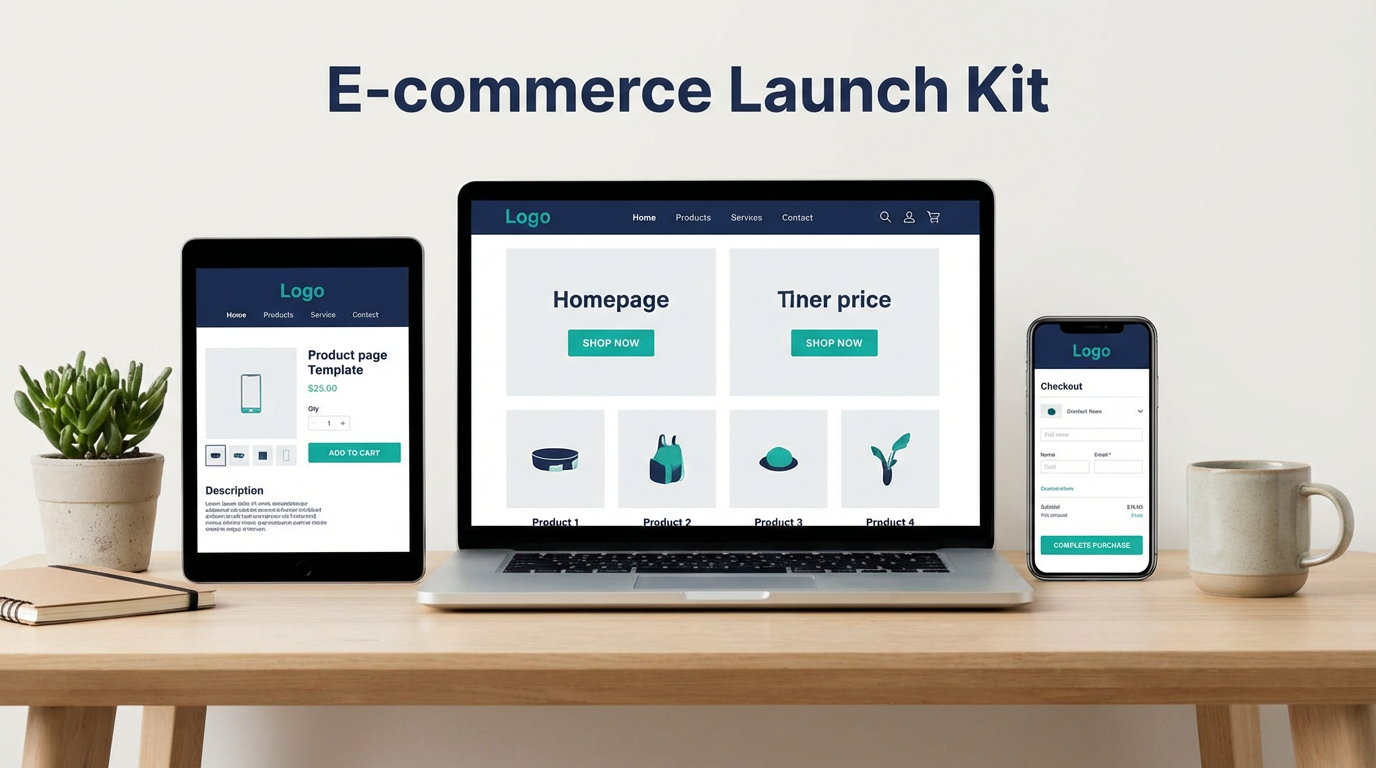
E-commerce Launch Kit
Complete toolkit for launching your online store — listings, pricing, inventory, and marketing.
Key Factors to Consider
- Ease of use: How technical are you?
- Cost: Monthly fees, transaction fees, and add-on costs
- Scalability: Can it grow with you?
- Customization: How much control do you need over design?
- Payment options: Does it support your preferred payment methods?
Platform Comparison
| Platform | Best For | Starting Cost |
|---|---|---|
| Shopify | Beginners, physical products | $39/month |
| WooCommerce | WordPress users, full control | Free (hosting separate) |
| Squarespace | Design-focused stores | $33/month |
| Custom (Next.js) | Full flexibility, digital products | Hosting costs only |
Setting Up Your Store: Step by Step
Step 1: Source or Create Your Products
Physical products:
- Manufacture your own
- Wholesale from suppliers
- Dropshipping (no inventory needed)
- Print-on-demand for custom designs
Digital products:
- Templates and toolkits
- Online courses and ebooks
- Software and apps
- Photography, music, and art
Step 2: Create Compelling Product Listings
Each product page needs:
- High-quality images: Multiple angles, lifestyle shots, and close-ups. Professional photography pays for itself.
- Descriptive title: Include keywords customers search for
- Benefit-driven description: Focus on how the product helps the customer, not just what it is
- Price and value justification: Explain why it is worth the price
- Social proof: Customer reviews and ratings
- Clear CTA: "Add to Cart" or "Buy Now" button that stands out
Step 3: Set Up Payment Processing
- Stripe: Best for most businesses, supports cards and wallets
- PayPal: Adds trust for customers who prefer it
- Apple Pay and Google Pay: Reduces checkout friction on mobile
Step 4: Configure Shipping (Physical Products)
- Calculate shipping costs accurately
- Offer free shipping above a threshold (increases average order value by 30%)
- Provide tracking information automatically
- Set clear delivery expectations
Step 5: Set Up Essential Pages
Beyond product pages, every store needs:
- About page: Your story and why customers should trust you
- FAQ page: Answer common questions before they become support tickets
- Contact page: Make it easy to reach you
- Return policy: Clear and fair policies reduce purchase anxiety
- Shipping information: Delivery times and costs
Getting Your First Sale
Free: Business Launch Checklist
50 essential steps to launch your business. Get it free.
Free Traffic Strategies
- SEO: Optimize product pages and create blog content targeting keywords your customers search for
- Social media: Share product stories, behind-the-scenes content, and customer photos
- Email marketing: Build a list with a lead magnet and send regular value-driven emails
- Reddit and forums: Participate genuinely in communities where your customers hang out
- Pinterest: Create pins for every product — Pinterest is a visual search engine
Paid Traffic (When Ready)
- Google Shopping Ads: Show your products directly in search results
- Facebook and Instagram Ads: Target specific demographics and interests
- Retargeting: Show ads to people who visited but did not buy (highest ROI)
Conversion Optimization Tips
- Mobile first: 70%+ of e-commerce traffic is mobile
- Fast loading: Every second of load time costs 7% in conversions
- Trust badges: SSL, payment icons, satisfaction guarantees
- Abandoned cart emails: Recover 10-15% of lost sales
- Exit-intent popups: Offer a discount before they leave
Get Your Complete Launch Kit
Our E-commerce Launch Kit includes store setup checklists, product listing templates, pricing worksheets, marketing calendars, and conversion optimization guides for a successful online store launch.
FAQ
How much does it cost to start an e-commerce store?
You can start for under $100 using free platforms and basic hosting. Budget $500-2,000 for a more professional setup with paid tools.
How long until I make my first sale?
With active marketing, many stores see their first sale within 1-4 weeks. Organic SEO traffic typically takes 3-6 months to gain momentum.
What sells best online?
Digital products have the highest margins. For physical products: niche items, personalized products, and solutions to specific problems tend to outperform generic commodity goods.