Why You Need a Social Media Content Calendar
Posting on social media without a plan is like throwing darts blindfolded. A content calendar transforms your social media from reactive to strategic, ensuring consistent posting, balanced content mix, and measurable results.
Businesses that post consistently see 2x more engagement than those that post sporadically. A content calendar makes consistency effortless.
Benefits of a Content Calendar
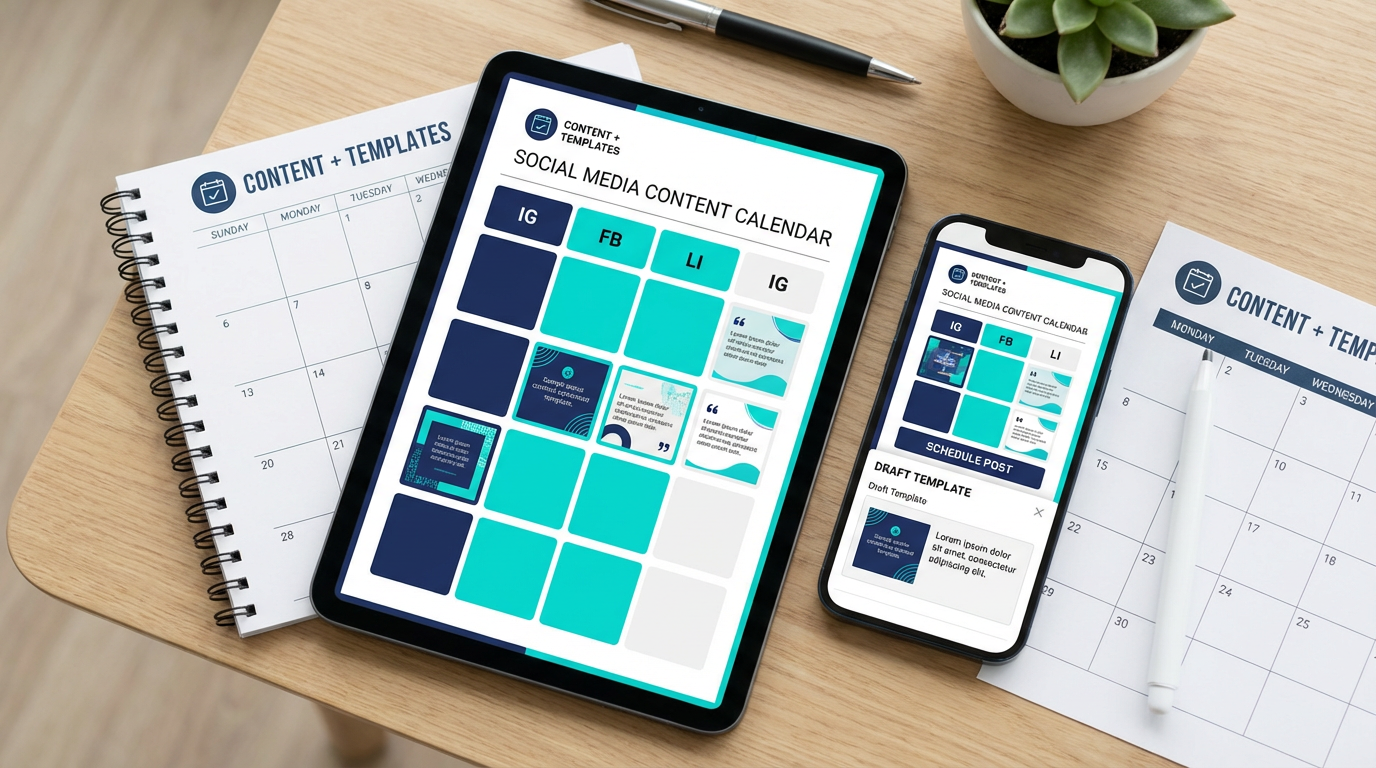
Social Media Content Calendar & Templates
90-day content calendar with 50+ social media post templates for all major platforms.
- Consistency: Never miss a posting day or scramble for content
- Quality: More time to plan means better content
- Balance: Ensure a healthy mix of promotional, educational, and entertaining content
- Collaboration: Teams can see what is coming and contribute ideas
- Analytics: Track what works and refine your strategy
How to Build Your Content Calendar
Step 1: Choose Your Platforms
Do not try to be everywhere. Pick 2-3 platforms where your audience actually spends time:
- Instagram: Visual brands, lifestyle, food, fashion, B2C
- LinkedIn: B2B, professional services, thought leadership
- TikTok: Gen Z and Millennial audiences, entertainment, education
- Twitter/X: News, tech, real-time engagement
- Pinterest: DIY, design, recipes, templates, wedding
- Facebook: Local businesses, community building, older demographics
Step 2: Define Your Content Pillars
Content pillars are 3-5 core themes that guide everything you post:
Example for a business consulting brand:
- Business tips and advice (educational)
- Client success stories (social proof)
- Behind-the-scenes (authenticity)
- Industry news and trends (authority)
- Product promotions (sales, max 20% of content)
Step 3: Set Your Posting Frequency
Quality beats quantity. Start with a sustainable schedule:
| Platform | Minimum | Ideal |
|---|---|---|
| 3x/week | 5x/week + daily stories | |
| 2x/week | 4x/week | |
| TikTok | 3x/week | 1x/day |
| Twitter/X | 1x/day | 3-5x/day |
| 5 pins/week | 15-25 pins/week |
Step 4: Plan Content in Batches
Block 2-3 hours once a week to plan and create content for the entire week:
- Review what performed well last week
- Check for relevant holidays, events, or trending topics
- Draft posts for each platform
- Create or source visuals
- Schedule using a tool (Buffer, Later, or Hootsuite free tiers)
Step 5: Use the 80/20 Rule
- 80% value: Educational, entertaining, or inspiring content
- 20% promotional: Product launches, sales, CTAs
This ratio builds trust and keeps followers engaged instead of feeling sold to.
Content Ideas That Work
Free: Business Launch Checklist
50 essential steps to launch your business. Get it free.
Educational Content
- How-to tutorials and tips
- Industry statistics and data
- Common mistakes and how to avoid them
- Tool recommendations and reviews
Engagement Content
- Questions and polls
- This or That comparisons
- Caption contests
- User-generated content reposts
Promotional Content
- Product features and benefits
- Customer testimonials
- Limited-time offers
- Behind-the-scenes of product creation
Measuring Success
Track these metrics monthly:
- Reach: How many people see your content
- Engagement Rate: Likes, comments, shares divided by reach
- Click-Through Rate: How many click your links
- Follower Growth: Net new followers per month
- Conversion Rate: How many take the desired action
Get Started Faster
Our Social Media Content Calendar & Templates kit includes pre-built monthly calendars, content pillar worksheets, platform-specific posting schedules, and 100+ content ideas ready to customize.
FAQ
How far ahead should I plan content?
Plan at least 2 weeks ahead, with a rough outline for the full month. Leave room for trending topics and real-time content.
What is the best time to post?
It varies by platform and audience. Generally: LinkedIn 8-10am weekdays, Instagram 11am-1pm and 7-9pm, TikTok 7-9pm. Test and check your analytics for your specific audience.
Should I use the same content across all platforms?
Repurpose, do not copy-paste. Adapt your message, format, and tone for each platform's unique audience and format.